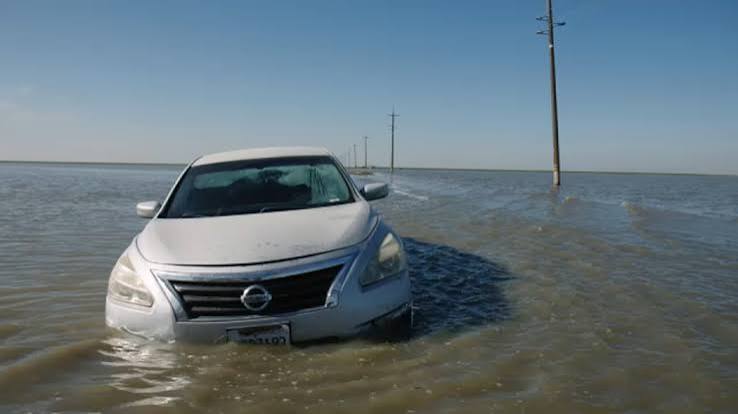
CALIFORNIA (KFSN) — In March of 2023, the Central Valley was hit by back-to-back storms.
Heavy rain caused catastrophic flooding at the Tulare Lake Basin.
“We had more water than what we could capture and what we could move,” says Laura Ramos.
Water rushed in and overnight, over 100,000 acres were underwater.
Roads turned into rivers with cars and buildings submerged. One poultry ranch was flooded.
Hundreds of millions of dollars in the ag industry were lost.
The historically wet winter tested dated infrastructure and the water systems in place.
“A lot of crops are grown where this water is today — pistachios, tomatoes, cotton, so it’s a big hit to our ag industry here in Kings County,” Ferrier said.
Since the devastation, more groundwater recharge basins were built, and challenges turned into learning.
Back in 2023, Don Cameron’s pistachio orchard, flooded by choice, took water from the Kings River to relieve pressure on other communities.
This led to a years-long study by the California Water Institute at Fresno State that looked at on-farm recharge.
It’s still underway but early findings are encouraging, as the trees can withstand the water for weeks at a time.
With the forecasted El Niño storms looming, the clock is ticking.
We’re told some of the levees broken at the time are still not fixed.
“We thought we had time,” Ramos said. “Not all of the infrastructure that has been damaged because of the flooding has been repaired. That is another worry.”
Longtime Valley farmer and Associate Professor of Pomology at Fresno State, Dr. Gurreet Brar, says farmers are already bracing for the El Niño winter projected, mainly concerned for small vegetable crops.
“We can definitely take care of our drains, our channels and our water channels so we have proper drainage,” he said. “All of those things we can do, but there’s a limit to that kind of preparedness at the orchard level. If there’s torrential rainfall, there’s nowhere for the water to go, then we would probably have to face the consequences.”
Right now, there is room in the aqueduct.
However, farmers and their crops are left vulnerable to Mother Nature, its timing and strength.